Monday, December 3, 2012

MHC diversity, design and disease. Why an MHC?

The MHC is thought to be the most dense region of genes and most polymorphic region of genes in the human genome.  It is highly unlikely that your MHC genes match any of your friends!!  Tissue matching in this gene region is important in transplantation medicine and that is why this gene complex was originally called the histocompatibility complex. 
 
However, of all the millions of different allele combinations which could occur, each individual only expresses a small subset of all the alleles.  Because the MHC presents antigens to the immune system, this means that we all "see" antigens slightly differently from one another and it is why we are more or less susceptible to some diseases and syndromes compared to others.
 
According to the published literature this is a conundrum for evolution or any origin model of the MHC.  Consider this statement in a recent publication:
 
 "An adaptive immune response is usually initiated only if a major histocompatibility complex (MHC) molecule presents pathogen-derived peptides to T-cells. Every MHC molecule can present only peptides that match its peptide-binding groove. Thus, it seems advantageous for an individual to express many different MHC molecules to be able to resist many different pathogens. However, although MHC genes are the most polymorphic genes of vertebrates, each individual has only a very small subset of the diversity at the population level. This is an evolutionary paradox."

Since we have also been exploring teleological explanations for the immune system, what might a teleogical view be regarding the MHC?  What design advantage does the MHC provide? 

Please share your thoughts with the group in this blog.

DUE Dec 10


Saturday, November 24, 2012

The Amazing Macrophage


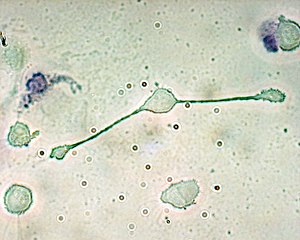
We have  been discussing the cells of the innate immune system in class.  Macrophages are often portrayed as fixed tissue cells which function as phagocytes and as APCs.  However, macrophages can do a lot of different things.  One of the most interesting recent finds is that macrophages can act as "nurse maids" for stem cells.  Actually the macrophages keep the stem cells in an immature state.   They do this by secreting prostaglandins. Check this out more here.

Here are some questions to ponder:

1 If macrophages guard stem cells where would you find them?  How do you propose they get to this location?

2 We have discussed several roles for prostaglandins.  We have also noted that prostaglandin inhibition is a major way to control inflammation.  Do you think prostaglandin inhibition factors (drugs) could alter the stem cell nurse/guard role of macrophages?  discuss.

3 What would be the role of preventing differentiation of stem cells?

4 Describe a way that you could test this special role of macrophages....i.e., what experimental system would you employ to show that this stem cell guarding function of macrophages is important to host immune function or host survival?


Due Dec 2


The image file used in this  blog is licensed under the Creative Commons Attribution-Share Alike 2.0 Generic license

Saturday, November 10, 2012

Somatic Hypermutation and Chance and Design


Somatic hypermutation is an amazing process which increases the diversity of the antibody response and can also lead to an increase in antibody affinity over time. As we noted in lecture, the human body has the potential to make 10 billion different antibodies from just a few gene regions and somatic hypermutation helps increase this diversity.

Somatic hypermutation is a process which essentially involves specific but semi-random mutation events which are focused only on a small region of the antibody genes.  The small region just happens to be the binding site of antibodies for foreign antigens.

 Mutations at large in the genome are often deleterious, yet somatic hypermutation and a process of selection leads to positive benefit for the host.  Thus, from a design perspective we cannot say that all mutations or natural selection processes are neutral or bad or deleterious.


But from a design perspective, why use a mutation process to increase antibody diversity and affinity?

What are some of the advantages or dis-advantages involved in using a mutation system to increase immune function in this way?

Due Nov 20

Sunday, October 21, 2012

hope for an AIDS vaccine and bNAbs

Research on an AIDS vaccine has been ongoing for years.  Very few positive results have been achieved.  More recently the focus has been on broadly neutralizing antibodies (bNAbs).  Broadly neutralizing antibodies show up naturally in a person infected with HIV only later in the infection.  These antibodies have been shown to be effective in neutralizing the HIV virus but only if they appear early in HIV infection.

The idea now is to try to develop a vaccine which elicits bNAbs.

In your investigation of this problem, determine why the vaccines developed in the past  have largely been ineffective in prevening AIDS. 

Also, answer the following questions.

Why are bNAbs effective?
Why are they more effective in early infection?
Why are they produced later in HIV infection?
Do you think an effective AIDS vaccine will be developed?

due Oct 31

Sunday, October 7, 2012

Danger Will Robinson


In the old TV series "Lost in Space" Will Robinson was warned by his robot when danger approached. In theoretical immunology a relatively new theory called the danger hypothesis is a challenge to the self vs non-self theory. In the danger hypothesis, broken down cell components alert the immune system.  Thus, it is a self component which alerts the immune system  Learn more about this hypothesis and answer the following questions.


1 What is the data that supports this theory?
2 Do you think this is a challenge to the self vs non-self theory?
3 Is it possible that PRRs are involved in the danger mechanism of immune activation?

DUE OCT 20

Thursday, September 27, 2012

Inflammasomes, Kaposi's Sarcoma and bad design


Many inflammatory factors work in the innate response to cause inflammation; a process that leads to mechanisms which combine to stop or eliminate the offending pathogen. Some factors which work together during inflammation are called, as a group, the inflammasome. The inflammasome can help promote apoptosis in viral infected cells. Kaposi's sarcoma , a cancer which is often found in AIDs patients, is caused by a virus which has developed a way to survive the inflammasome and prevent apoptosis and survive inside cells.


1 Describe the components of the inflammasome.
2 Describe how the Kaposi virus causes cancer.
3 Describe how the Kaposi virus evades the inflammasome.
4 Inflammation causes a lot of illness in humans in our society today.  In some cases inflammation can cause illness even without the presence of a pathogen.  Is this evidence of bad design? Discuss.

Due October 16

Sunday, September 16, 2012

Comparative Immunology


The mammalian immune system appears to be the most complex of all known animal and plant immune systems.  In fact, invertebrates do not possess in general most aspects and the adaptive immune system.  Some creatures like fish possess some antibodies but not the full repertoire of antibodies and other factors found in mammalian systems....thus fish appear to possess a "transitional" immune system. 
 
Mammals and humans require the adaptive immune system for survival.  And even though invertebrates don't appear to require the adaptive system for survival they do display some immune responses consistent with the adaptive immune response...i.e, rejection of transplanted tissue.
 
Discuss the evolution and design aspects of the immune systems found in plants, invertebrates, mammals and fish.  Do fish really possess a "transitional" immune system? Do any truly "intermediate" adaptive immune systems exist? Do you see design features inherent in the invertebrate immune system which appears to function without an adaptive system?
 
DUE Sept 28