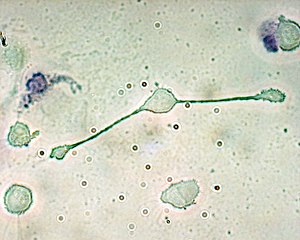
We have been discussing the cells of the innate immune system in class. Macrophages are often portrayed as fixed tissue cells which function as phagocytes and as APCs. However, macrophages can do a lot of different things. One of the most interesting recent finds is that macrophages can act as "nurse maids" for stem cells. Actually the macrophages keep the stem cells in an immature state. They do this by secreting prostaglandins. Check this out more here.
Here are some questions to ponder:
1 If macrophages guard stem cells where would you find them? How do you propose they get to this location?
2 We have discussed several roles for prostaglandins. We have also noted that prostaglandin inhibition is a major way to control inflammation. Do you think prostaglandin inhibition factors (drugs) could alter the stem cell nurse/guard role of macrophages? discuss.
3 What would be the role of preventing differentiation of stem cells?
4 Describe a way that you could test this special role of macrophages....i.e., what experimental system would you employ to show that this stem cell guarding function of macrophages is important to host immune function or host survival?
Due Dec 2
The image file used in this blog is licensed under the Creative Commons Attribution-Share Alike 2.0 Generic license

Blood forming stem cells live in the bone marrow and are surrounded by support cells that fulfill their needs and direct their development into mesenchymal cells. One of the support cells of this system is a kind of cell from the macrophage family. These macrophages protect the stem cells from differentiation.
ReplyDeleteThe adult/somatic stem cells are located throughout the bone marrow, adipose tissues, and blood of the human organism.
Macrophages guarding adult stem cells would be found throughout the bone marrow, adipose tissues, and blood. These stem cells act as a repair system for the human body. Macrophages are said to protect these cells within the tissues. Monocytes originate from progenitors (stem cells) in the bone marrow. These cells enter into the peripheral tissues via the bloodstream during homeostasis and inflammation. Circulating monocytes leave the blood stream and migrate towards the tissues where pro-inflammatory cytokines or microbial products are present. The cytokines released by the WBC’s because of tissue damage signals the monocytes to migrate towards the area of concern. It is here that the monocytes squeeze through the cell walls of the blood vessels and infiltrate the tissue. Once tissue infiltration has occurred the monocytes is differentiated into the macrophage. Here, the macrophage can act as a phagocytizer or a protector of the adult stem cells. Prostaglandins are secreted by the mature monocyte (macrophage) in order to protect the stem cell.
If inhibitory prostaglandin drugs were administered to a patient there is a great possibility that they would detrimentally impact the protection of the stem cells. The reason this would occurs is because the drugs would do one of two things. Either the drugs would inhibit macrophages from producing prostaglandins, and in turn, preventing the absorption of the material from the stem cells. Or, secondly, the drugs would bind to the stem cell and prevent its absorption of the prostaglandins. Either mechanism the drugs employ, the stem cells will be allowed to differentiate. As a result of this, the stem cells function would be lost or altered. The entire purpose of preventing differentiation of the stem cells, via prostaglandins is to maintain an internal system of repair within certain parts of the body. By maintaining stem cells in their original state they can be replicated essentially indefinitely. This could allow for the body to store up undifferentiated stem cells in case of a large loss of cells via an infection or blood loss. By maintaining a high amount of stem cells “in case of an emergency” the body will have a better chance at fighting off that infection or preserving necessary function during a high cell loss.
The mechanism that could be used to demonstrate the function of stem cell guarding macrophages would involve prostaglandin inhibitors. Mice could be used in this experiment. One group of mice would be given placebos and the other group of mice would be given prostaglandin inhibition drugs. After the drugs have had time to impact the patient, a sample of bone marrow, adipose tissue, or blood would be taken from each mouse in each group and the amount of stem cells would be analyzed and recorded. The placebo mice group’s stem cell count would be compared to the prostaglandin inhibitor mice group’s stem cell count. This would be done in order to see if inhibiting the prostaglandins secreted by the macrophages would impact the stem cell differentiation function.
1 If macrophages guard stem cells where would you find them? How do you propose they get to this location?
ReplyDeleteYou would find the stem cells deep within the bone marrow before they become activated. When they do, they travel to the peripheral blood (short lived) and the tissues (longer life span) in an inflammatory response, this is where they go through the differentiation process. They originate in the bone marrow but get to other locations through peripheral blood circulation. They move into tissues by being activated, since macrophages remain in a true resting state before activation. In this resting state, once matured, is where they can take a stem cell under its wing and prevent its differentiation. It has been discovered that they serve another purpose to protect these adult stem cells.
2 We have discussed several roles for prostaglandins. We have also noted that prostaglandin inhibition is a major way to control inflammation. Do you think prostaglandin inhibition factors (drugs) could alter the stem cell nurse/guard role of macrophages? discuss.
Logically when you look at the role of prostaglandin, using an inhibition drug could alter the nurse/guard role of macrophages. The inhibition drug could suppress the secretion of prostaglandins from macrophages. That would mean that there would be no delay differentiation and preservation of the youthful state of the stem cells. This would help in an inflammatory response because more stem cells would be activated quicker and more would differentiate to aid in inflammation.
I think Tori makes a great point when discussing the impact these drugs could have and the importance of storing up undifferentiated stem cells. Using these drugs could aid in immediate inflammatory response but could have a negative long term affect with suppressing the body of its function to prepare itself for more serious infections.
1. Since Macrophages have been discovered to be stem cell protectors, they are found in the bone marrow where most of the adult stem cells are located. The funny thing is that immature macrophages (monocytes) are formed in the bone marrow then leave, but some come back. Macrophages in the blood stream are usually attracted to an infection site, but the stem cells would not give off an "infection site" signal. There are certain chemokines found in the body, MCP 1 and 3 that help the monocytes leave the bone marrow in the first place. Maybe there are other chemokines and signals given off by the stem cells that attract the mature Macrophages back to the bone marrow.
ReplyDelete2. Yes I think the inhibition of prostoglandins would effect and change the role of Macrophages as the guard of stem cells because it is the macrophages that secrete the prostoglandins which are absorbed by the stem cells and delay the differentiation process. The secreted prostaglandins also work on another type of helper cell, the mesenchymal cells. These cells also absorb the prostaglandins and delay their growth and maturation and in doing so, these cells tell the stem cells to have more receptors for the prostaglandins. This continuous cycle of events keeps the stem cells from maturing or differentiating too quickly in order to always have a reserve for when another type of cell needs to be formed.
3. You would want to prevent the stem cells from differentiating too quickly or too soon in order to always have a reserve of these cells. These cells are special in that they can differentiate into different kinds of cells that can be used all over the body and for different functions. In cases of infection or other crises, these stem cells are called upon to form new cells that will help maintain the health of the body. If the stem cells differentiate too quickly, there might not be enough to differentiate in the near future for something else that occurs in the body. This would not allow the body to fight infection properly and could lead to other drastic complications. The role of Macrophages in preventing these cells from maturing to fast is extremely important.
I agree that Tori's mechanism to show the macrophage's role in preventing the stem cells from differentiating would work and show the different counts of stem cells present in a patient. However I wonder if there is another way to observe the effects of not having the macrophages there, and observe the stem cells differentiate whenever they want to without just counting the number of cells. In a mice model, maybe a prostaglanding inhibitor could be used to block that mechanism, and the mouse could be exposed to a series of bacteria or virus that could cause an infection. (This might be torture for the mouse so Im not sure this is ethical.) If at the first infection the mouse fought it pretty quickly, but the second one it did not, maybe it was because all of the reserve stem cells differentiated to the site of that infection. This way we could see the exact effects of what would happen if the macrophages were not there as protectors for the stem cells.
ReplyDelete1. Macrophages that step into the role of preventing maturation in stem cells would need to accumulate in the bone marrow tissues in order to be in direct contact with the major body of stem cell development so as to release prostaglandins at an effective concentration and distance. The bone marrow is accessible from the blood stream, and these mature white blood cells would be able to simply follow the blood capillaries that feed the bone marrow tissues and re-enter. Alternatively, as these stem cells are the precursors to all of the known white blood cells in the body, it may be that certain stem cells differentiate into these "nurse cells" and simply remain behind in the bone marrow to protect and inhibit the maturation process in other stem cells.
ReplyDelete2. Prostaglandin inhibition could absolutely cause problems for this nurse/stem cell relationship long-term, and the risk factor involved in abusing and remaining on prostaglandin suppression long-term are as high as ever, especially when we see prostaglandin secretion protecting stem cells from chemotherapy and maintaining the essential integrity of the immune system. To jeopardize the stem cell population in the bone marrow is to compromise the entire basis of the immune system.
3. The role prostaglandins play in regulating the immune system by delaying maturation in stem cells is puzzling, but points to a huge possibility for immune system regulation. Were stem cells to proliferate and multiply all the various components of the immune system sporadically, there would be a drastic increase in confusion and cell signaling mistakes. The release of too many immature white blood cells increase the chances of an infection creating an over-reaction elicited in the immune system, and a much larger production of inflammatory elements and chemotaxis. This will disrupt an entire organism's body function, and even minor infections could pose life-threatening risk. By reigning in the stem cell proliferation of the immune system, the body's immune response can remain tightly regulated and kept at maximum security while still maintaining a safety buffer so that the organism's life isn't jeopardized.
4. An extremely simple method by which to determine the importance of stem cell maintenance by these white blood cells is to simply take a test-organism and deliver a potent dose of anti-prostaglandins to the bone marrow tissues at regular intervals. This will inhibit the regulatory function of the nurse cells, and the resulting side effects from such a treatment will point to the importance of the role these nurse cells play on an organismic scale. Alternatively, to prevent cross-reactions or proliferation of the anti-prostaglandin agent, mutants that have the prostaglandin receptor on the stem cells knocked out will give the same result. Either of these experiment set-ups should give a concise indicator for how important these white blood cells are.
3 What would be the role of preventing differentiation of stem cells?
ReplyDeleteThe role of preventing differentiation of stem cells would be as said before a "keep safe" mechanism to keep the cells on guard at a high level for any type of large immune response for these cells to then differentiate at a high amount. I agree with Tori in that maintaining a high amount, the body could have a better chance at fighting off an infection with these cells on guard in an early stem state. Richard also makes a great point in that preventing differentiation could help the immune system remain tightly regulated.
4 Describe a way that you could test this special role of macrophages....i.e., what experimental system would you employ to show that this stem cell guarding function of macrophages is important to host immune function or host survival?
A mechanism that could test this role is to use a mice model and inject a prostaglandin inhibitor drug, and then to inject the mice with a specific bacteria or pathogen and see the effect that the pathogen has in terms of macrophage function and immune response. You could have another mice be the control model and not use any prostaglandin inhibitor and record its reaction to pathogen compared to that with the prostaglandin deficient mouse.
1) Stem cells are found throughout the human body, however hematopoietic stem cells are found within the bone marrow. Based on the research I've conducted, there seems to be a lot of evidence that macrophages are generated in the bone marrow and some just stay behind to regulate the stem cells. Of course, this presents more questions than it answers. How are the stem cells regulated before the macrophages are created, if they are regulated? What regulation system tells some of the macrophages to stay behind while others enter the blood stream? Clearly, more research needs to be done in this area.
ReplyDelete2)Yes it is possible, if not probable, that prostaglandin inhibitors could seriously distort this process. However, I have doubts about how serious the side effects would be. Prostaglandin inhibitors are often used in treatment of cancer, and I think that the benefits of their use would be well worth the risk. There is evidence that when added directly to the bone marrow matrix, macrophages are unable to stop cell differentiation. However, Prostaglandin inhibitors are not administered directly to bone marrow tissue, and I would think that the dose would have to be incredibly large and taken over a long period of time for these problems to present themselves.
3)It would be incredibly detrimental to the human body if all of our stem cells differentiated. We would lose the ability to create antibodies to the specific antigens that we encounter. Given that this process occurs continuously, I'm not sure how long we would survive if we didn't have reserve stem cells. We don't realize just how effective our immune system is at killing infections.
4) For an experiment, I would produce knockout mice that are unable to produce macrophages that inhibit the differentiation of stem cells through prostaglandins. I would then fluorescently tag the ko mice's undifferentiated bone marrow stem cells, and compare to a normal mouse's bone marrow. If the macrophages really play such an important role, than the ko mice would have significantly fewer undifferentiated stem cells. The ko mice would also have a much shorter life span, and would have a higher rate of opportunistic infections at the end of their life.
ReplyDelete1. Since stem cells are found in the bone marrow, this is also where you would find macrophages. The macrophages that are found in the bone marrow are actually “born” in the bone marrow itself. While some of the macrophages leave the bone marrow via the circulatory system, some macrophages stay behind and act as nurse cells to the stem cells.
ReplyDelete2. Since prostaglandins are involved in inflammation, inhibitors of prostaglandins (such as NSAIDs) inhibit inflammation, and this includes the work of macrophages. Macrophages secrete prostaglandins, which are absorbed by the stem cells and cause the delaying of differentiation. If macrophages are inhibited from performing properly, the secretion of prostaglandins could be reduced and thus inhibit the delay in differentiation of stem cells. This could prove to be detrimental, as a reduction in stem cell population due to the mass differentiation could prevent the body from effectively fighting infection or repairing tissue damage.
3. Allowing stem cells to differentiate at will could be very dangerous. This mass differentiation would produce many immature immune cells, with no mature immune cells to effectively fight infection. Uncontrollable differentiation of adult stem cells can also contribute to the formation of tumors.
4. An experiment could be performed where the pathway to make macrophages was blocked, or an activity that is thought to be performed or aided by macrophages could be inhibited so that the macrophages could not assist the stem cells. Another possibility is to use animals that were genetically altered to not produce macrophages. Host immune performance and host survival would then be analyzed after these changes were made.
1. You can find macrophages within the bone marrow living in union with the stem cells. The macrophages actually originate from the bone marrow in the form of monocytes, and ironically these monocytes are produced from stem cells. Monocytes differentiate into macrophages and are released into the body for immunity defense.
ReplyDelete2. I definitely feel that prostaglandin inhibiting drugs would alter the macrophages as well as the stem cells. If prostaglandin is inhibited then the advantages that specialist macrophages provide will become nullified. Anti-inflammatory drugs help nullify prostaglandin so stem cells are proliferated into the appropriate immune response, rather than being stored up in reserves. Guard cell macrophages may be produced less as a result of their ineffectiveness, and monocytes could possibly focus on creating soldier phagocytes outside the bone marrow.
3. The role of preventing differentiation of stem cells is to preserve these highly mutable cells in the case that they are seriously needed. By creating a reserve of young stem cells, the body prepares itself for an appropriate defense to multiple situations of distress. If the stem cells continually differentiated it would almost be a waste.
4. A way to test the importance of these macrophages is to administer a drug that would eliminate/prevent them from being created or from being expressed. Then introduce a variety of pathogens into the host and evaluate how the immune system reacts differently from an untreated individual. We somewhat see this test in cancer patients whose drugs inhibit the expression of prostaglandin, and basically nullifies the purpose of these macrophages. It appears that the immune system does get weakened but that may be for a variety of other factors.
1.Blood stem cells are found in the bone marrow. Since macrophages act as nurse cells they would also be found there as well. This means that they are actually formed in the bone marrow itself. In this way they can get out into the circulatory system via the blood or stay in the cell and “help” the stem cells.
ReplyDelete2.That would depend on the abilities of the drug. Can the drug enter the bone marrow? If so, it is possible that the nurse cell role of the macrophage could be altered. The main role of macrophages as nurse cells is to delay differentiation of stem cells. Anti-inflammatories like NSAIDS if able to affect the macrophage could inhibit this delay reducing the stem cell population as a result of increased differentiation.
3.Allowing stem cells to differentiate on their own would cause an increase in immature immune cells and thus a lack of mature immune cells causing decreased immune function.
4.You could devise a test to shut down the supposed macrophage nurse cells in some test subjects and enhance them in others and watch for the result. This could possibly be done using gene knockout to remove the macrophage “nurses” and some sort of upregulating mechanism to increase macrophage “nurses.”
(1)If macrophages guard stem cells, they should also reside where stem cells are located. As stated in journal, blood-forming stem cells live in comfort in the bone marrow. Macrophages are found in the stem cells, which reside in the bone marrow. These macrophages start off their life as monocytes, and once they are first called into action, they turn into macrophages.
ReplyDelete(2) Although prostaglandin inhibitions is a major way to control inflammation, I think that prostaglandin inhibition factors (drugs) could alter the stem cell nurse/guard role of macrophages. According to the journal, the function of prostaglandins is to delay differentiation, preserve the youthful state of the stem cells, and work on neighboring mesenchymal cells, which activate the secretion of a delaying substance in them and increase the production of receptors for prostaglandins on the stem cells. If prostragladin is inhibited, the function of the prostaglandin is also inhibited. Macrophages will not be able to secrete the prostaglandins in order for the stem cells to absorb this substance. As a result, this can alter the stem cell nurse/ guard role of macrophages.
(3) The role of preventing differentiation of stem cells is to reserve them for future needs and crises. The stem cells are beneficial in that they can proliferate and differentiate into billions of mature blood immune cells to help the body cope with infection. However if the stem cells differentiate too quickly, this can produce immature immune cells that will be no help in fighting infections, and also these uncontrolled stem cells could eventually form tumors.
ReplyDelete(4) An experimental system I would use to show the special role of macrophages is to have one experiment that inhibits the signaling system of prostaglandin secretion by the macrophages, and another experiment that does not inhibit prostaglandin.