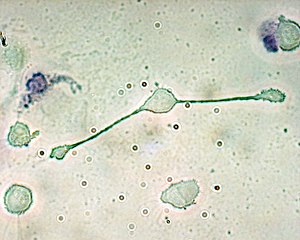
We have been discussing the cells of the innate immune system in class. Macrophages are often portrayed as fixed tissue cells which function as phagocytes and as APCs. However, macrophages can do a lot of different things. One of the most interesting recent finds is that macrophages can act as "nurse maids" for stem cells. Actually the macrophages keep the stem cells in an immature state. They do this by secreting prostaglandins. Check this out more here.
Here are some questions to ponder:
1 If macrophages guard stem cells where would you find them? How do you propose they get to this location?
2 We have discussed several roles for prostaglandins. We have also noted that prostaglandin inhibition is a major way to control inflammation. Do you think prostaglandin inhibition factors (drugs) could alter the stem cell nurse/guard role of macrophages? discuss.
3 What would be the role of preventing differentiation of stem cells?
4 Describe a way that you could test this special role of macrophages....i.e., what experimental system would you employ to show that this stem cell guarding function of macrophages is important to host immune function or host survival?
Due Dec 2
The image file used in this blog is licensed under the Creative Commons Attribution-Share Alike 2.0 Generic license

